

By Axel Ebermann
“In a democracy, criticism of public officials is not disrespect.
It is responsibility.”
Civic Engagement, As It Actually Looks
In recent months, Mount Vernon residents have done what civic engagement is supposed to look like.
They showed up. They testified. They asked hard questions about decisions that will shape taxes,
land use, infrastructure, and public trust for years to come.
They questioned a 2026 budget rushed through during the Christmas holiday season, producing a
5.47 percent property tax increase. They filled City Council chambers during two public hearings
to oppose a sweeping Comprehensive Plan, raising concerns about flooding, infrastructure capacity,
density, and process, only to see the plan adopted weeks later, just before Thanksgiving.
They pressed the Comptroller at a public forum after he warned that Mount Vernon could face
insolvency within two years if current spending patterns continue.
This was not abstract dissent. It was concrete, persistent, and rooted in lived experience.
From Policy to People
What followed, however, was not sustained engagement with those concerns. Instead, across City
Council meetings, IDA sessions, Board of Estimate votes, and even celebratory press events,
Mount Vernon officials began shifting the focus. Less attention was paid to the substance of
residents’ questions. More attention was paid to the people asking them.
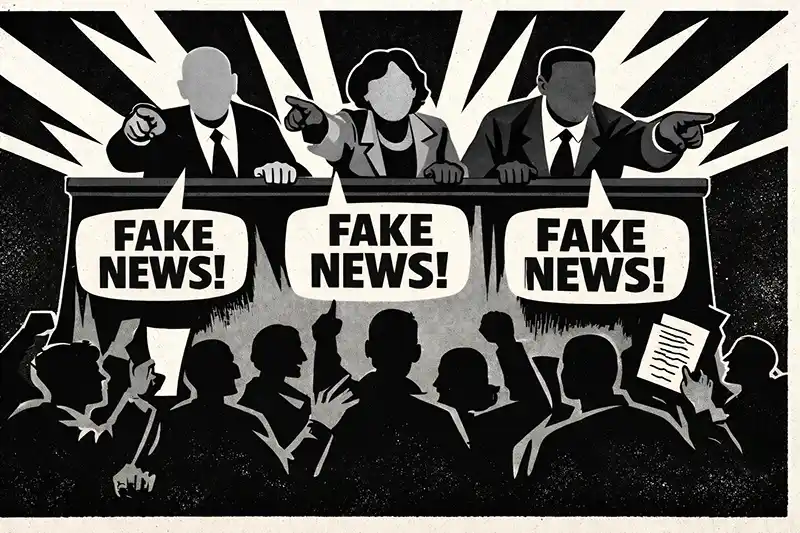
Criticism was framed in advance as “misinformation.” Skeptics were labeled “naysayers.”
Dissent itself was cast as irresponsible, destabilizing, or socially corrosive, often before
any formal proposal, financial analysis, or evidentiary process had even occurred.
This did not happen once. It became a pattern. And patterns are how governing styles reveal themselves.
Messaging the Public Before the Public Speaks
The dynamic was clearest at a January meeting of the Mount Vernon Industrial Development Agency.
At the time, no PILOT tax exemption application had been presented. No financial modeling had been
released. No public comment had responded to a specific proposal.
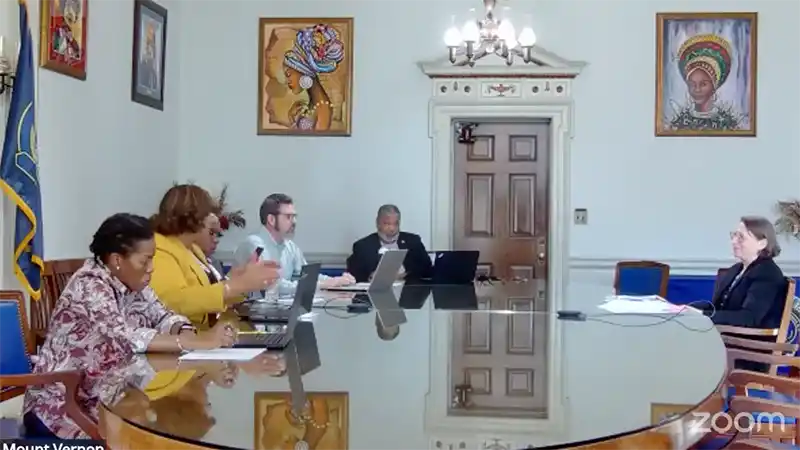
Yet before any of that occurred, Mayor Shawyn Patterson-Howard interrupted the proceedings to
issue a warning, not about future applications, but about the public itself. She described
Mount Vernon as a community that “runs with no information,” adding that even when information
is available, residents “run with misinformation.” She specified who the message was meant for,
“the naysayers,” the “Henny-Penny, everything’s falling apart crowd.”
Nothing had been decided. Nothing had been evaluated. Yet public reaction was already being
anticipated, categorized, and dismissed.
How Democratic Erosion Actually Starts
This matters because democratic erosion rarely begins with censorship. It begins when disagreement
is framed as illegitimate before it is allowed to meet the record. Officials insist the process
is neutral. Questioning the process, however, is treated as suspect.
When Scrutiny Becomes a Character Flaw
That same logic resurfaced days later during a City Council legislative session addressing the
controversial development at 214 Gramatan Avenue. Rather than confining remarks to jurisdictional
limits or directing residents toward records and procedural remedies, the discussion moved quickly
into moral judgment.
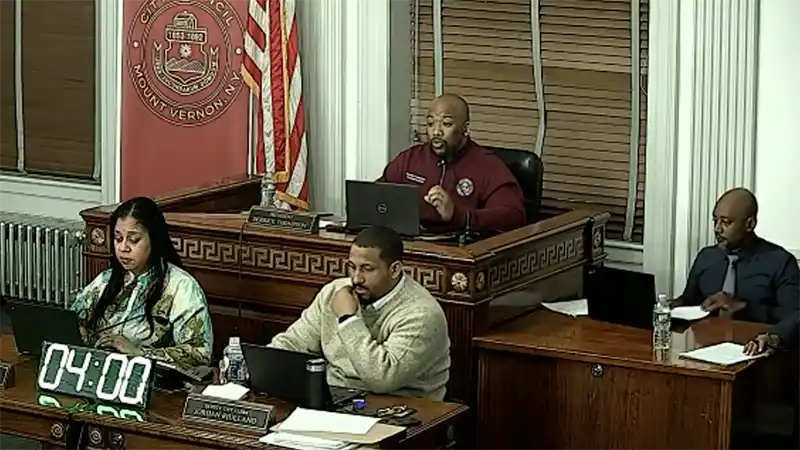
Councilman Andre Wallace condemned critics for “jumping on the bandwagon,” warning that such
behavior “tears cities apart.” Council President Derrick Thompson reinforced the framing,
cautioning residents against “slander,” “negativity,” and “speaking nastily,” while urging them
to stop questioning the motives behind government actions.
What stood out was not only what was said, but what was missing. There was no invitation to file
FOIL requests. No clarification of evidentiary standards. No distinction between criticism of
process and personal attack. Records, law, and decision-making receded into the background.
Tone and intent took center stage.
Scrutiny was no longer treated as a democratic function. It was treated as a behavioral problem.
Consensus as Performance
The same posture appeared in its most polished form at the press event announcing adoption of
Mount Vernon’s Comprehensive Plan. This was not a deliberative forum. The plan had already passed.
What remained was the question of legitimacy.

The Mayor emphasized years of listening, dozens of workshops, and broad participation, then closed
with a pointed admonition, residents should “participate,” not “spectate,” and not “complain.”
To reinforce the message, a single advisory committee member, also a former City Hall employee,
was elevated as a representative voice. She openly disparaged residents who opposed the plan
while the Mayor stood beside her, nodding and applauding. Other advisory members, some of whom
had raised serious concerns about density, infrastructure, and process, were not invited.
This was not consensus-building. It was consensus-staging.
The Chilling Effect
What follows rarely makes it into the minutes, but it is felt in the room. When officials repeatedly
pre-signal that skepticism equals misinformation, residents adapt. Some still attend meetings but
speak less. Others stay silent. Many stop coming altogether.
Political communication scholars describe this as a chilling effect, closely associated with the
work of Elisabeth Noelle-Neumann, whose Spiral of Silence theory explains how public discourse
narrows not because people change their minds, but because the perceived cost of speaking becomes
too high.
In Mount Vernon, the pattern is familiar. When dissent is framed as ignorance or bad faith before
facts are aired, participation becomes risky. Silence becomes safer. Over time, that silence is
cited as evidence of consensus, used to justify decisions that were never meaningfully tested in
public.
Meetings still happen. Votes are taken. Press conferences are held. But the substance of democratic
engagement, the open contest of ideas, evidence, and competing visions, quietly recedes.
Accountability Is Not Negativity
Mount Vernon does not suffer from too much criticism. It suffers from mismanagement, weak oversight,
and a political culture that increasingly treats scrutiny itself as illegitimate.
Public office is not meant to be comfortable. Neither is public participation. When criticism is
preemptively labeled “misinformation,” the response cannot be retreat. It must be more insistence,
more questions, more records requests, and more attention to process and evidence.
Silence protects power. Scrutiny protects the public.
Residents cannot afford to be managed into submission. If accountability feels inconvenient to
those in office, that is not a reason to step back. It is the clearest reason to step forward.