

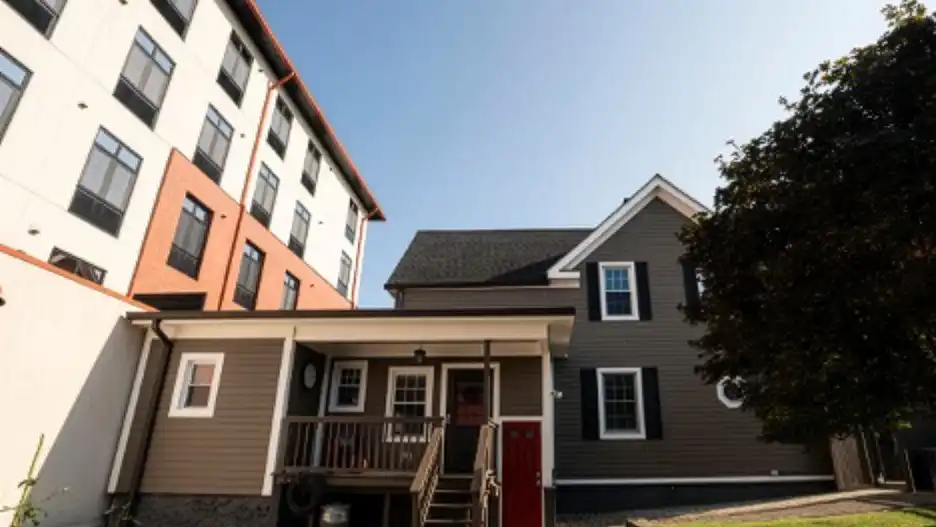
Mount Vernon loves big speeches about “equity,” “revitalization,” and “moving the city forward,” especially if those speeches come with a photo op and a gold shovel. But if you want the clearest, most stomach-turning example of what has actually been moving forward in Mount Vernon, look at 214 Gramatan Avenue—and the years-long paper trail of warnings, admissions, shrugs, and bureaucratic duck-and-cover described by homeowner Dina M. Perriello.
Because if what Ms. Perriello lays out is even half true, then this isn’t merely a planning dispute or a neighbor complaint. It’s a case study in what happens when a city government treats residents like obstacles and public service like a branding exercise: gross negligence dressed up as procedure, and incompetence protected by titles.
“It never should have been approved” — and yet it kept going
Ms. Perriello’s story is not a single bad day. It’s a five-year slow-motion failure, with repeated claims that officials acknowledged something was wrong—yet the project advanced anyway.
According to her timeline and emails, demolition began in February 2019 with no permit, followed by a building permit in September 2020 for lot 3 only. Soon after, she says she learned the structure next door would have a zero setback and began sending urgent messages to city officials.
She describes being told variations of the same line Mount Vernon residents know too well: “Nothing can be done,” “Not my jurisdiction,” “It’s too late,” and finally, the coup d’grace, “Get a lawyer.”
In Mount Vernon, the highest taxed community in Westchester County, we don’t get governance—we get evasion.
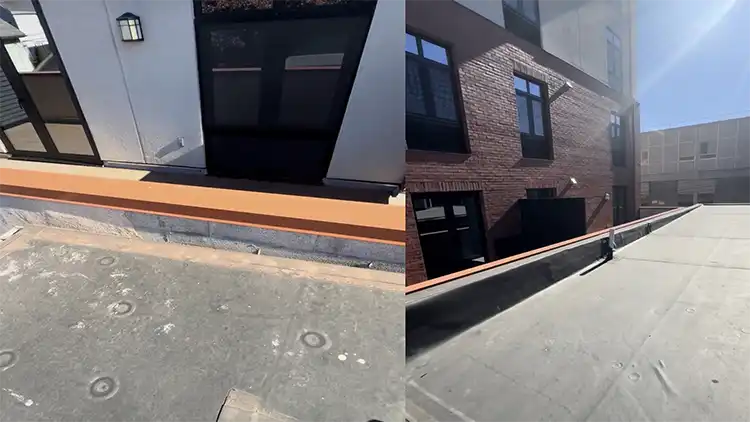
And that’s how Ms. Perriello ends up with a building so close to her house that any old predator could step out of his window right onto her flat roof.
The core allegation: approvals missing for Lots 5 and 6
Here are the central claims Ms. Perriello repeats—and the ones to which the City has offered no response:
- The zoning application and approval was issued for Lot 3
- The building permit was issued for Lot 3
- The development was processed as if it involved multiple lots (Lots 3, 5, and 6)
- No further applications or approvals were issued for Lots 5 and 6
- After reviewing the property file in City Hall on May 14, 2024, Ms. Perriello discovered there was no zoning application or approval on file for Lots 5 and 6
FOIL responses later confirmed the same.
If that’s accurate, this isn’t a “whoops.” If we’re being generous, it’s a systemic breakdown of basic controls—exactly the kind of breakdown that ordinary residents pay for in property damage, legal fees, and sleepless nights while officials keep collecting paychecks.
But if we’re being real—and this is Mount Vernon—it is the clearest, most visible example of public corruption that we’ve seen in a long time.
The alleged damage: vibration, water, structural harm—and the shrug heard round City Hall
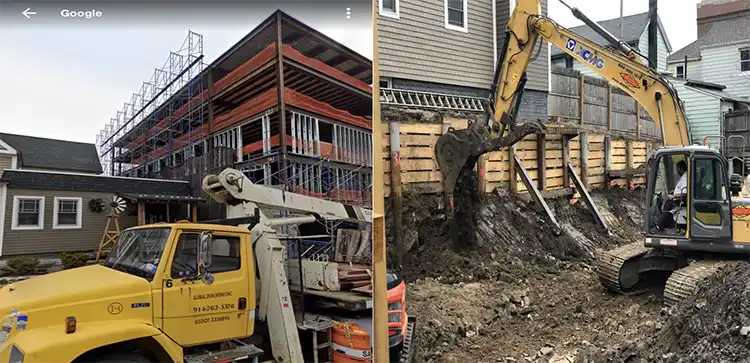
Ms. Perriello says that during months of excavation—bedrock work that she describes as extreme—she experienced severe vibrations, sought monitoring reports, and received little to nothing back. She claims the consequences now include:
- Structural concerns (including bedrock shifting into her basement floor)
- Asbestosis exposure from frayed insulated pipes
- Water drainage problems created by the new adjacent retaining wall
- An inability to ever repair a portion of her home where there is a zero setback
- Serious safety and quality-of-life impacts (privacy, trespass risk, and more)
Equally alarming is her claim that she repeatedly requested records (including vibration monitor reports) and that the response pattern was delay, deflection, and silence.
Mount Vernon residents should ask: If a city can’t produce basic monitoring and compliance records for a project of this scale, what exactly are “inspections” doing besides existing on paper?
Moreover, given the City’s recent crowing over the adoption of a sloppy, thoughtless comprehensive plan without benefit of an environmental review or fiscal study, residents should also ask themselves whether the people responsible for what happened to Ms. Perriello should be entrusted with a plan of that magnitude.
The cast of “not my job”
In a July 2025 email exchange, Ms. Perriello directly challenges Comptroller Darren Morton, who responded by emphasizing he was not Commissioner of Buildings and did not have jurisdiction over the Zoning Board.
And this is where Mount Vernon’s culture shows itself in full: the reflex to treat government like a circle of job descriptions instead of a responsibility to protect residents.
Ms. Perriello’s reply cuts to the heart of the problem: she alleges officials acted outside their roles when it suited them, failed to act inside their roles when residents needed them, and now want their titles to operate like immunity shields.
The City will say: that’s not fair. Residents will say: show us the record—and the record speaks for itself.
At the end of the day, two questions rise to the top: (1) if the approvals were proper, where are they? And (2) if they weren’t, who let this proceed—and why?
Because “I wasn’t the right person” isn’t an acceptable answer when a resident is warning you for years, producing documentation, requesting records, and describing harm.
Residents must also ask: who gained from this debacle?
A LoHud article published in August 2025 revealed that the architect behind this project was a longtime tenant of councilperson Caitlin Gleason, who was on the planning board when this was approved—and cast her vote of approval.
This is what public corruption looks like in real life—in real time—in technicolor.
What corruption actually looks like in Mount Vernon
People hear “corruption” and imagine a movie: envelopes, back rooms, dramatic arrests. And some of that probably happened here.
But more generally, in Mount Vernon, corruption often looks far more ordinary—and that’s why it survives. It looks like:
- Records that don’t exist when they should
- Enforcement that doesn’t happen when it must
- A permanent class of officials who know how to say “not my department” while the public eats the consequences
Ms. Perriello’s timeline lays out something far worse than bureaucratic delay. It documents alleged admissions like “it never should have been approved,” followed by years of deliberate inaction.
If those admissions are accurate, this isn’t mere failure. It’s cover-your-own-ass—and residents should be furious.
Senior officials did not fix the problem. They avoided it. They ghosted Ms. Perriello while the damage to her home compounded. That is unacceptable.
A taxpaying resident should not be forced into financial ruin hiring lawyers to correct the City’s own error—whether that error arose from negligence, incompetence, greed, or corruption.
Here, Ms. Perriello was victimized twice: first by Mount Vernon’s outrageous tax burden, and then by the refusal (or inability) of its “leaders” to do their jobs.
City officials must stop hiding behind titles and start taking responsibility. The City caused this harm. The City must make her whole.
What the City must release—now
Or, if the City disputes Ms. Perriello’s claims, it should provide the public immediately:
- The full approval chain, site plan resolutions, and zoning determinations for Lots 3, 5, and 6
- Proof of required notices, hearings, and filings (if any)
- All inspection history, enforcement actions, and compliance records
- Any vibration monitoring reports and related submissions required or received
- A clear explanation of how an allegedly unapproved scope could proceed for years without decisive intervention
- A pre- and post-survey proving the building is not encroaching
- Fire and safety approvals
And to be clear: “we’re looking into it” is not an answer. Not after five years.
A note to officials tempted to dismiss this as “drama”
This is not drama. This is what happens when residents discover that the rules only apply to them.
Mount Vernon can keep pretending it’s “revitalizing,” but if residents can’t get straightforward answers about approvals next door to their homes—then what is being revitalized, exactly?
Not trust. Not accountability. Not the rule of law.
Just the same old Mount Vernon machine, grinding forward—until the next resident’s life becomes the next headline, and the next resident’s dream is destroyed.