

As Mount Vernon confronts building collapses, deteriorating public structures, and years of neglected infrastructure, a developer facing federal litigation and environmental enforcement disputes is building on East Broad Street—and seeking tax benefits.
Mount Vernon has a building problem. And the warning signs have been impossible to miss.
In July 2026, a three-story building at 16 North Bond Street collapsed during stabilization work, crushing parked cars and forcing evacuations. Neighbors had warned about the deteriorating structure; one had raised concerns at a Buildings Department hearing just a week earlier.
In August 2024, the former National Gear and Piston building at 217–225 South Fourth Avenue partially collapsed, sending masonry into the street and damaging vehicles.
The property belonged to the Mount Vernon Industrial Development Agency—the same agency now considering financial assistance for Stagg. Its August 8, 2024 meeting minutes record an emergency authorization of up to $150,000 for structural engineering and demolition for South Fourth Street.
The city’s parking garages tell a similar story. In March 2026, a hole in the upper deck forced the closure of part of the Sidney Avenue garage.
At the City Hall garage, MVCIP documented exposed reinforcing steel, cracked beams, water intrusion, and temporary structural supports. After the mayor said engineering reports existed for every city structure, the city responded to a FOIL request for the City Hall garage report by stating that no responsive records had been identified.
Then there are the bridges. The South Fulton Avenue and East Third Street overpasses were closed in January 2023 after state engineers flagged structural deficiencies.
A March 2026 city engineering report describes severely deteriorated steel supports at the South Fulton Avenue bridge, still closed to vehicles at the time, and proposes removing the bridge and rebuilding the roadway. City records describe years of temporary repairs to these overpasses.
In February 2026, a sprinkler-pipe failure also flooded apartments at the recently constructed 625 MacQuesten Parkway, displacing residents.
A Buildings Department With a Record of Failure
Mount Vernon’s Buildings Department has faced years of documented criticism.
As MVCIP reported in Had Trouble With Mount Vernon’s Building Department?, a 2018 State Senate study identified the department as among the worst in New York—a characterization later acknowledged by a city spokesperson.
By 2024, state officials had identified failures involving required safety inspections, missing inspection reports and construction records, inadequate staffing, and deficient code-enforcement practices.
The state threatened to transfer code-enforcement responsibilities away from Mount Vernon unless the city corrected the problems. Some deficiencies dated back to 2009.
The backlog persisted. City legislation in 2025 acknowledged more than 1,700 outstanding building inspections and the need for additional outside assistance.
A city with collapsing structures, deteriorating garages, and long-closed bridges has also struggled to carry out the inspections and enforcement meant to protect the public. Despite the mayor’s protestations to the contrary, nothing substantive has changed in the Buildings Department.
This is the backdrop against which developer Mark Stagg is constructing a 44-unit market-rate apartment building at 10–16 East Broad Street and seeking a 15-year payment-in-lieu-of-taxes agreement from the IDA.
Two questions demand answers: What scrutiny is Mount Vernon applying to this developer and his construction project? And why should taxpayers subsidize a development already well underway?
The Federal Government Is Suing Over Construction Deficiencies
In September 2026, the U.S. Department of Justice filed a Fair Housing Act lawsuit against Stagg Group and associated defendants concerning six apartment developments in the Bronx and New Rochelle.
Federal prosecutors allege that the developments were designed and constructed without accessibility features required by federal law, citing inaccessible entrances, excessively steep ramps, narrow doorways, and improperly constructed bathroom thresholds.
The Justice Department is seeking corrective construction work, changes to future building practices, and compensation for affected individuals. The lawsuit remains pending.
The federal government is questioning whether six completed Stagg-associated developments comply with basic accessibility requirements. Has Mount Vernon reviewed those allegations and examined the East Broad Street plans for similar deficiencies?
Who will be accountable if problems are discovered after residents move in?
A Severely Injured Worker, Environmental Enforcement, and Four Lawsuits
In November 2025, worker José Candelario suffered severe chemical burns and serious eye injuries at a Stagg-associated construction project at 26 Garden Street in New Rochelle.
An investigation by the New York State Department of Environmental Conservation (DEC) followed.
According to reporting based on DEC records and court filings, DEC concluded that chemicals had been deliberately introduced into a groundwater monitoring well, potentially compromising environmental testing at the contaminated property.
In June 2026, DEC moved to revoke the property’s Brownfield Cleanup Program certification.
The consequences extended to four other Stagg-associated projects in the Bronx, Peekskill, and Yonkers, where DEC rejected applications, rescinded an acceptance, or declined requested approvals.
The developers filed four lawsuits challenging DEC’s actions. They disputed the agency’s findings, maintaining that workers mistakenly poured chemicals into the well while trying to clean a drain. The New Rochelle property owners separately contested the proposed revocation.
The disputes remained unresolved in the latest available reporting.
A worker suffered devastating injuries. State regulators investigated, reached adverse findings, and took action affecting multiple development projects. The developers responded with litigation.
What has Mount Vernon done with this information?
Has the city examined Stagg’s environmental compliance history? Has it reviewed the contractors and subcontractors working on East Broad Street? What safeguards are in place to protect workers, neighboring properties, and the public?
These are questions that should have been answered before construction advanced this far.
Three Workers Injured in a Bronx Construction Fire
In 2023, three workers were injured in a fire at a Bronx construction site associated with Stagg Group.
CBS New York reported numerous safety violations at the site and concerns raised by workers about training. Stagg Group responded that worker safety was a serious concern and that it sought to follow appropriate practices.
Who is responsible for construction safety at East Broad Street? What is the site’s inspection history? Have violations been issued? What procedures govern hazardous work, fire prevention, worker training, and emergency response?
A city with documented weaknesses in code enforcement should be demanding answers before something goes wrong—not explaining afterward why warning signs were missed.
What Did the IDA Actually See on November 18?
At its November 18, 2026 meeting, the Mount Vernon IDA reconsidered Stagg’s proposed 44-unit, market-rate apartment development at 10–16 East Broad Street and a request for a 15-year payment-in-lieu-of-taxes agreement, commonly known as a PILOT.
The presentation has raised questions about the accuracy of the information provided to board members.
Resident Karen Scacchi says Stagg Group attorney Kathleen Bradshaw displayed an outdated photograph while discussing the project’s current condition. Scacchi identified the relevant portion of the meeting as being at approximately 48 minutes and 15 seconds.
assistance.
What Stagg’s Photograph Shows
This is the photo used in the Stagg presentation:
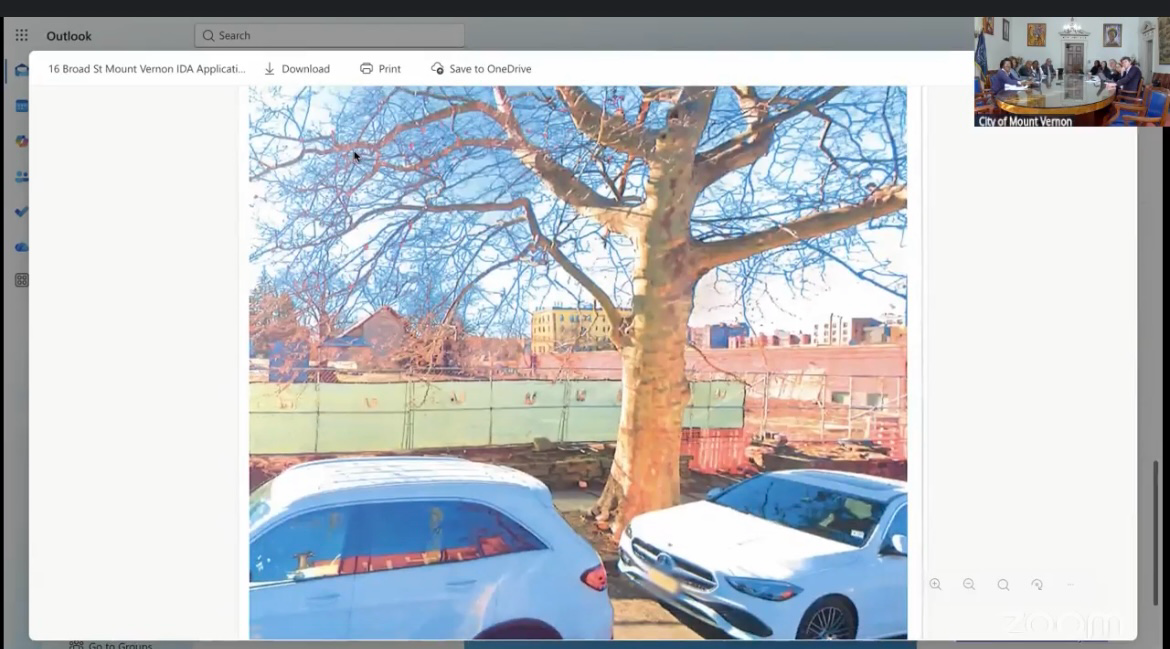
No construction. No blocked streets. No equipment.
What Residents’ Photographs Show
These were taken in summer and sent to the city.
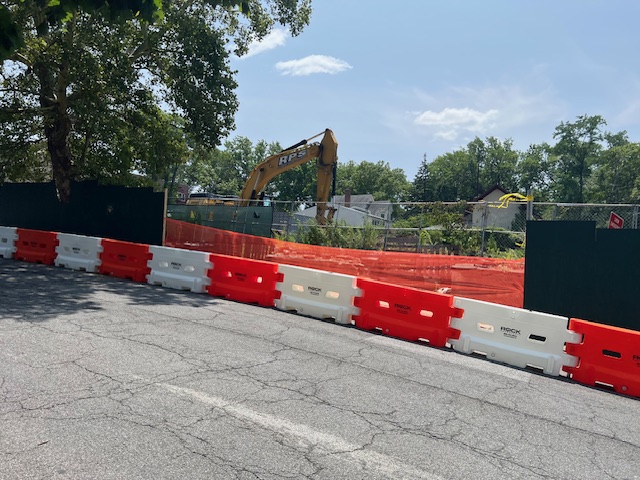
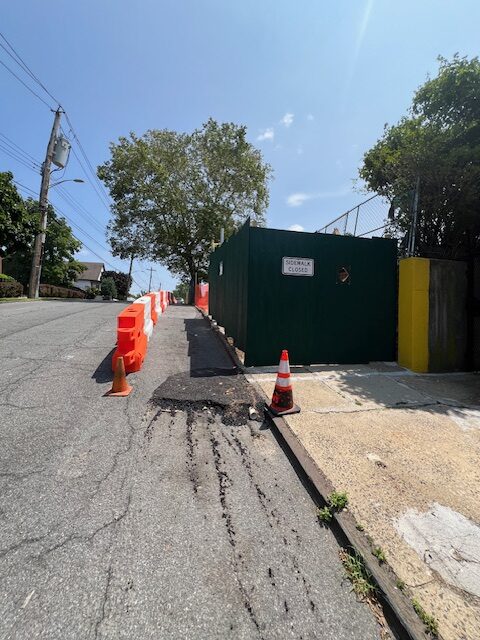
And these were taken in November and show advanced construction: multilevel framing, a crane, equipment, barriers, and a closed sidewalk.
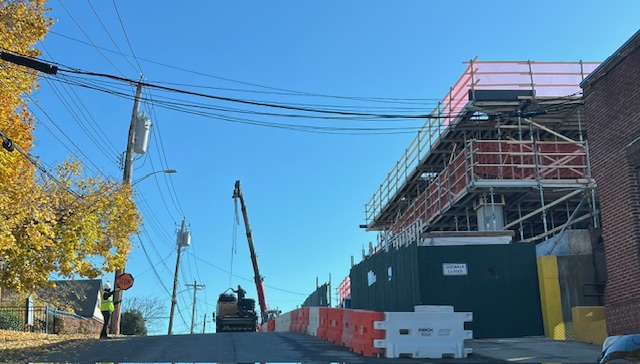
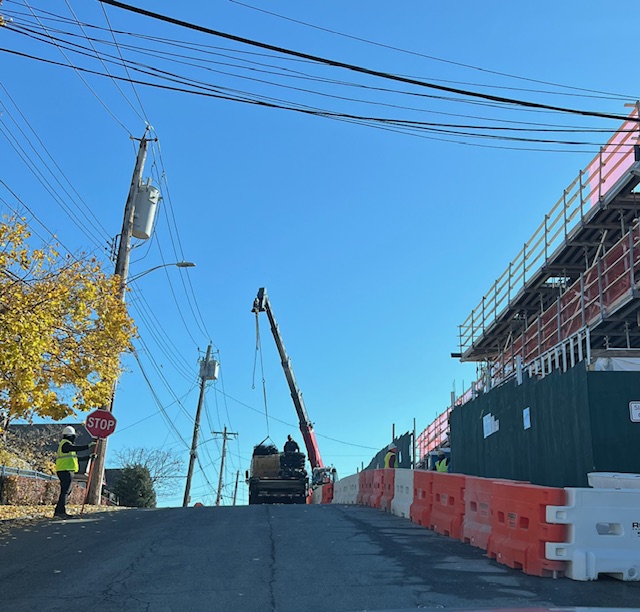
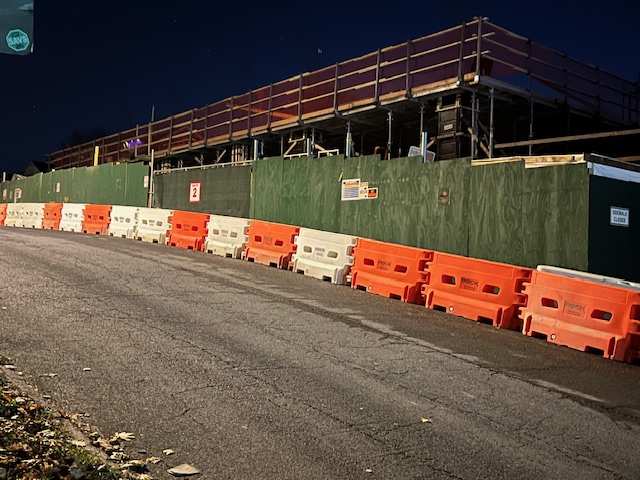
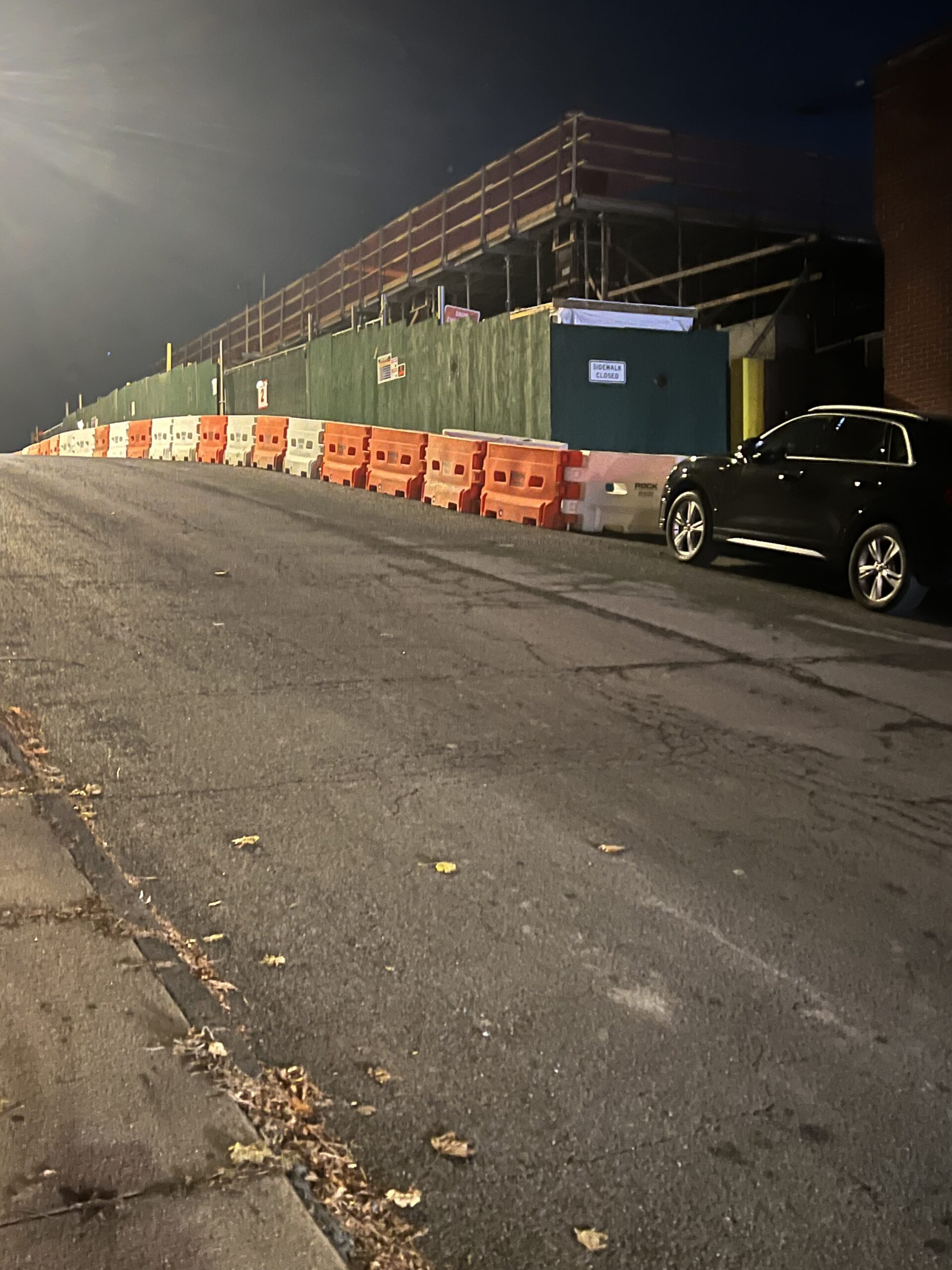
Did the IDA receive an accurate, current depiction of the development it was being asked to subsidize?
The date of each image matters. So does the construction schedule. IDA members should have been told how far the project had progressed when they were asked to consider financial assistance.
Scacchi also reports that she contacted the Buildings and Public Works departments in July about sidewalk closures, fencing, removal of parking meters, and the absence of posted permits.
QUESTIONS THE CITY MUST ANSWER
- What building, street-opening, sidewalk-closure, and other permits were issued?
- Who authorized the removal of parking meters and restrictions on public access?
- What inspections have occurred, and what violations have been recorded?
- Did the IDA receive current photographs and an accurate construction timeline?
The relevant records should be made public.
Why Is Stagg Asking for Tax Benefits Now?
Residents Vince Ferrandino and Ms. Scacchi report that the development previously sought and was denied financial assistance from the Mount Vernon and Westchester County IDAs.
Yet construction proceeded. The photographs show a project well beyond the planning stage, with substantial private investment already committed.
Stagg is already building. Why should Mount Vernon taxpayers now provide a 15-year tax benefit for a project that is already well underway?
What changed after the earlier denials? What new public benefit is being offered? How much tax revenue would Mount Vernon and its school district forgo? What financial evidence demonstrates that the project needs assistance?
And why should a 44-unit market-rate development receive preferential tax treatment while ordinary property owners shoulder the city’s mounting fiscal burdens?
Mount Vernon is facing serious financial challenges. Residents have endured repeated property-tax increases, with another one on the way, while city officials have acknowledged substantial liabilities, a negative fund balance, and incomplete financial reporting.
The IDA deferred action at its November 18 meeting pending financial analysis.
Before any vote, the agency should publish the complete PILOT application, the financial justification, the fiscal impact on each taxing jurisdiction, records of earlier applications and decisions, and the applicant’s responses to residents’ compliance concerns.
We also urge the city to retain someone other than Victoria Storrs to conduct the cost-benefit analysis. Her previous work for the Mount Vernon IDA has been seriously undermined by subsequent fiscal analyses revealing millions of dollars in discrepancies in projected taxpayer impacts. These are not minor differences in methodology. They go directly to whether developers receive substantial tax breaks at the expense of Mount Vernon residents and schools. Why does the City continue to rely on a consultant whose projections have been so substantially challenged?The burden belongs on the developer to demonstrate what Mount Vernon gets in return—not on residents to discover what the city is giving away.
The Tax Break Is Only Part of the Problem
The PILOT application has brought renewed attention to East Broad Street. The more consequential issue is what Mount Vernon has done to ensure that the building is being constructed safely, lawfully, and to the standards future residents deserve.
The Buildings Department is responsible for permits, inspections, and code enforcement. The IDA is responsible for evaluating discretionary financial assistance. Both must make decisions grounded in the actual record.
Stagg’s representatives should address the federal accessibility lawsuit, environmental enforcement history, construction-safety incidents, and safeguards at East Broad Street.
City officials should disclose the permits, inspections, complaints, and enforcement actions relating to this project. IDA board members should explain the public benefit of the proposed subsidy.
The city cannot afford to treat development approvals as paperwork exercises or tax incentives as favors to be granted on request.
Mount Vernon needs safe buildings, effective inspections, responsive public agencies, and meaningful returns for taxpayer assistance.
What did Mount Vernon know about this developer? When did it know it? What has it done about it? And why is the IDA considering a tax break before residents have received those answers?
Mount Vernon should be able to answer every one of those questions.
And it should answer them before another public dollar is committed.