

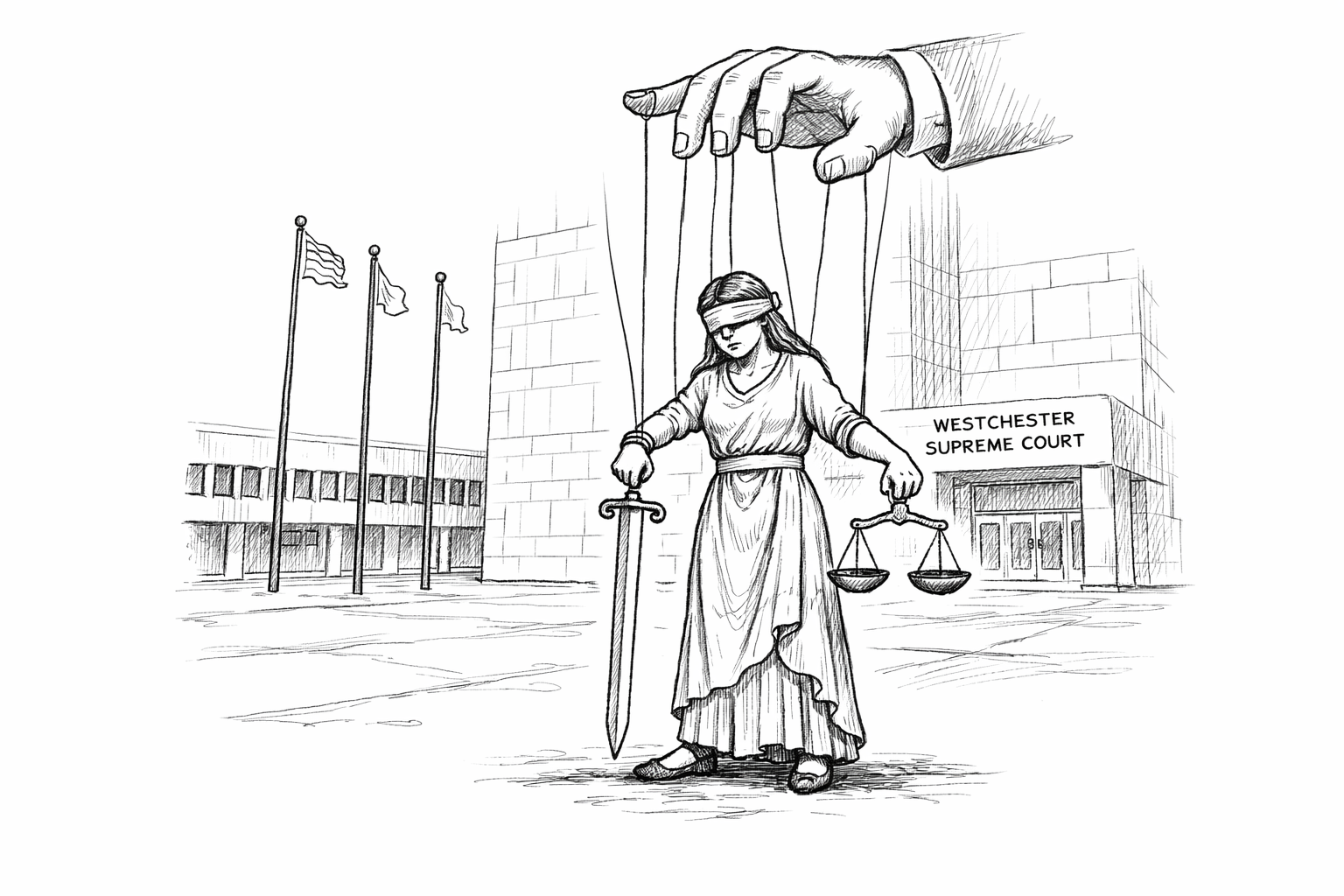
Residents in Mount Vernon are increasingly confronting a hard question:
Can they get a fair shake in Westchester County Supreme Court?
Because recent cases don’t just raise concerns about outcomes — they raise concerns about process, impartiality, and whether the system is working as it should.
A Court Shaped by Politics
In Westchester, judicial independence exists on paper.
In practice, the County Executive runs a “slate of judges” — candidates who are selected, supported and advanced through a political process that ties them to the very power structure they may later be asked to scrutinize.
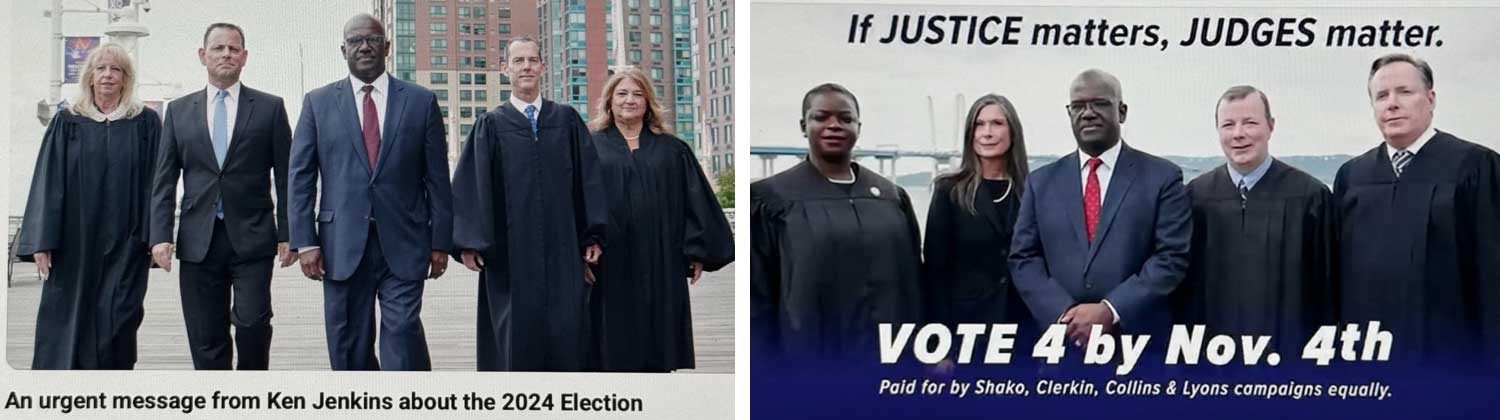
That matters.
Because when cases involve politically connected defendants, the question isn’t just what the law says.
It’s whether the system is capable of applying it without fear or favor.
Mount Vernon: The County’s Pressure Valve
Mount Vernon sits at the intersection of state and county priorities — often not as a partner, but as a release valve.
- Social burdens get shifted here
- Policy failures get absorbed here
- Resources flow in — but rarely translate into meaningful improvement
Why? Because local leadership has long operated under a simple model:
Keep the State and County happy, and the money keeps coming.
But those dollars don’t fix infrastructure.
They don’t stabilize neighborhoods.
And they don’t build long-term capacity.
Too often, they disappear into a system that benefits insiders, not residents.
Residents who try to challenge that system — through lawsuits, FOIL requests, or public advocacy — are told the courts are where accountability happens.
But what happens when the court itself becomes part of the problem?
Recent cases raise exactly that concern.
Case Study 1: Ebermann v. Peterson
In this case, which is currently before Justice David F. Everett, a pro se plaintiff alleged defamation by a sitting school board member. The school board member is represented by counsel. Transcribed proceedings and the record reflect that the court:
- Conducted an off-the-record session attempting to persuade the plaintiff to abandon his case.
- Made comments sympathetic to the politically connected defendant.
- Ordered portions of the proceeding sealed without justification.
- Issued a written decision that departed from the court’s own oral ruling.
- Most recently, the court appears intent on ignoring its own orders.
The defendant’s counsel has not complied with court-ordered discovery. In response, the petitioner:
- Contacted opposing counsel requesting compliance and was ignored.
- Contacted the court and was ignored.
- Submitted written correspondence to the court and was ignored.
- Filed a motion to compel compliance with the court’s discovery order – and was ignored.
The motion remains undecided. The court has not responded. The case has effectively stalled.
This is not just normal court delay. It raises a fundamental question:
Why would a court so actively ignore even its own orders?
Case Study 2: Thompson v. Patterson-Howard
In another matter involving the sitting Mayor which contained explosive allegations of misuse of taxpayer dollars, tipping off a now admitted child molester about an open investigation, and gross election interference:
- Justice Thomas Quinones initially failed to recuse himself despite a known personal and political relationship with the mayor.
- After recusal, the case was reassigned to Justice Robert S. Ondrovic and dismissed within a day.
- The decision included assertions not found anywhere in the record.
- Legal claims explicitly stated in the complaint were entirely ignored or misstated.
- The judge’s summary order used language copied, almost verbatim, from a City press release.
The speed, substance, and sequence raise a troubling question:
Was the outcome determined before the case was even considered?
Case Study 3: Bronxville Field Club — Intervention Ignored
In a separate matter involving the Bronxville Field Club and long-standing flooding in Hunt’s Woods, a resident moved to intervene in the litigation on August 5, 2025 — seeking to represent the interests of the Hunt’s Woods community – those directly affected.
That motion should have been addressed promptly.
It wasn’t.
Instead, under Justice Maurice Dean Williams, it was allowed to languish for nearly six months — not because it was complex, but because delay served the parties already at the table.
During that time, the City and the Club negotiated a global, behind-closed-doors settlement that resolved multiple cases at once, bound future City action, and locked in risk for downstream residents. All while the residents most affected were kept out.
The delay had a purpose. It created the space to reach an outcome without interference from those whose rights were at stake.
That outcome wasn’t accidental. It was manufactured, enabled by delay.
As of the date of this post, even after public opposition halted the proposed settlement, the motion to intervene still has not been decided.
The residents most affected remain outside the case.
And the question is unavoidable:
Why does the case continue to move forward without them — while the interests of a wealthy, politically connected party remain fully represented?
A Pattern, Not an Outlier
These are not isolated complaints. They point to a broader concern:
- Off-record communications
- Politically sensitive cases handled irregularly
- Decisions untethered from the record
- A system that appears to close ranks when power is challenged
And when multiple judges — Everett, Quinones, Ondrovic, and Williams — are implicated across matters, where the only through line is political power, the issue is no longer individual.
It is structural.
The Question That Won’t Go Away
The legitimacy of any court rests on one thing: public confidence that cases are decided fairly.
Right now, in Mount Vernon, that confidence is nonexistent.
Not because of rhetoric. Because of experience.
So, the question must be asked — directly and without apology:
How compromised is the Westchester County Supreme Court?
And more importantly:
Can Mount Vernon residents expect justice there — or just the appearance of it?
Why This Question Matters Now
Mount Vernon residents have just filed another lawsuit — this time challenging the City’s Comprehensive Plan.
They are spending their own time and money to protect the community from a plan they believe is thoughtless, incomplete, and unlawfully adopted.
That case will now be decided in this court.
Which makes the question immediate:
After everything residents have seen — the delays, the irregularities, the outcomes that strain credibility — what should they expect now?
Because this is not theoretical.
Residents are doing what the City would not.
And in return, they are asking for something basic:
A fair shake.
A court that applies the law as written.
A court that follows its own orders.
A court that adheres to the ethical obligations that come with judicial power.
Nothing more.
But certainly nothing less.